
Representing rural youth at the Inclusion & Diversity Forum 2026

Last month, Rural Youth Europe was represented at the Inclusion & Diversity Forum 2026, organised by the SALTO Inclusion & Diversity Resource Centre at the Pajulahti Olympic & Paralympic Training Center in Finland.
Bringing together around 150 participants from across Europe and beyond, the forum provided a space for people working across youth work, policy, research and inclusion to share experiences, learn from one another and explore how EU Youth programmes can become more inclusive and accessible.
Christian Ganhör from Rural Youth Austria attended the forum as an external representative of Rural Youth Europe, bringing a rural youth perspective to discussions around inclusion and the barriers that can prevent young people from participating.
Here, Christian shares his reflections from the event:
The Inclusion & Diversity Forum 2026, organised by SALTO, brought together around 150 people from different backgrounds at the Pajulahti Olympic & Paralympic Training Center in Finland. The aim of the forum was to share experiences, learn from one another, and develop ideas to make EU Youth programmes more inclusive and accessible for everyone. I attended the event representing Rural Youth Europe, where I shared experiences and perspectives on inclusion from a rural context.
Why rural representation matters
It was particularly important for rural youth to be represented because geographical location can create significant barriers to participation. Young people living in rural areas often have to travel long distances to reach larger cities, airports, or events. Even where public transport is available, the journey can require considerable additional time and effort. When discussing inclusion and diversity, it is therefore important to also consider these geographical barriers and ensure that rural young people are not overlooked.
Putting inclusion into practice
One of my biggest takeaways was seeing how many different aspects of inclusion can be considered in practice. The event itself was a great example: the accommodation and facilities were highly accessible, dietary requirements were taken into account, a quiet room was available for anyone who needed a break from the activities, and sign language interpreters were present alongside presenters. Participants with disabilities could also have a support person with them throughout the event. Clear guidelines for creating an inclusive environment were also established, showing that accessibility and inclusion can be built into every part of an event.
I was also reassured to learn that many national agencies responsible for Erasmus+ programmes are aware of the specific challenges faced by rural youth and are actively looking for ways to engage with them. It was encouraging to see that rural young people are not forgotten in the wider discussion about inclusion.
Finally, beyond the knowledge and practical ideas I gained, the event was a great opportunity to meet people with very different backgrounds and professions. I had many meaningful conversations, exchanged experiences, and simply had a great time. I left the event with new ideas, new connections, and a stronger sense that inclusion works best when we actively consider the different barriers people face.
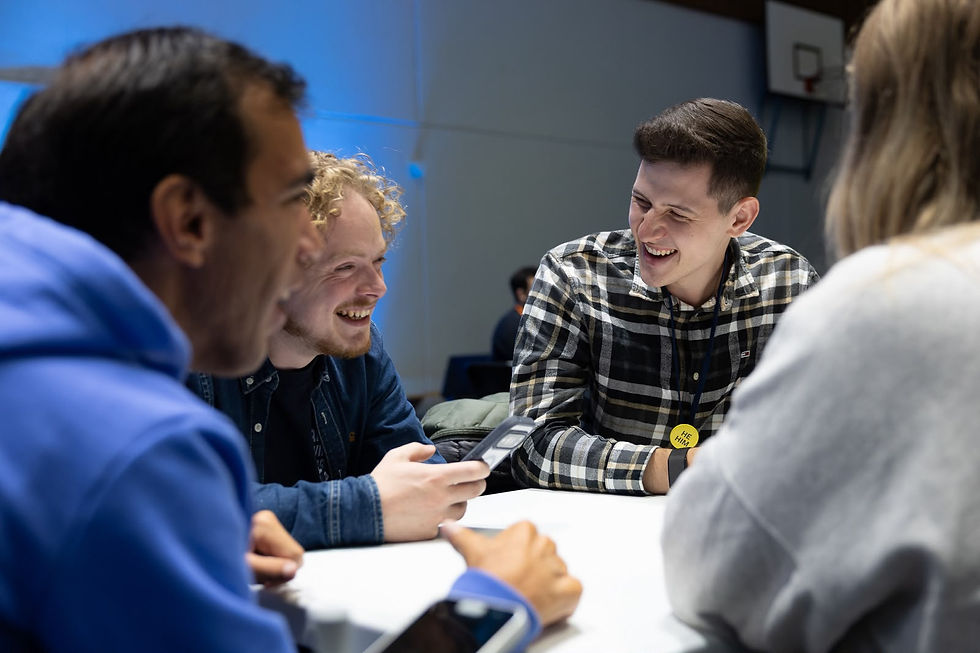
Photo credit: Negin Aladdin


Comments